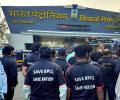
In 2017, a consortium led by Russian state oil company Rosneft agreed to buy Essar Oil for $12.9 billion in India's biggest foreign acquisition of a homegrown company. Rosneft's buyout of Essar's assets was meant to herald a wave of energy investments in India - over six decades after Esso, Caltex and Shell invested in India's refining sector in the 1950s. But the government has tripped up in its efforts to sell Bharat Petroleum Corporation Ltd (BPCL), formerly Burmah Shell, a blue chip public sector company. Bidders include a couple of global funds and resources firm Vedanta.
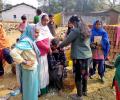
Bharat Biotech is targeting to manufacture one billion doses of its intra-nasal vaccine in 2022 which is under clinical trials now.

'Antibodies remain in the blood for at least seven to nine months.'
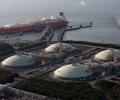
Around 15 years ago, when Reliance Industries (RIL) struck natural gas in the Krishna-Godavari (KG) basin off the east coast, the government made plans to supply that fuel cheaply to scores of generators that sprang up in India triggered by the discovery. Most of the plants, which account for 6 per cent of India's total generation capacity, operate sparsely after the KG-D6 area first failed to meet production targets, and then finally shut shop. Affordable domestic gas was why those thermal plants came up and the rate of the fuel today is why those generators hardly operate. Record liquefied natural gas (LNG) rates may yet again unravel India's ambitions to expand use of gas in industries, households and vehicles. Rates, while volatile, may stay strong this decade as developed nations with higher purchasing power embrace gas as the transition fuel.

After dropping to a low of Rs 1,298 apiece, the stock finished at Rs 1,380, its lowest level since November 22, the second day of listing.

Why does the world's fastest-growing major consumer of energy fail to attract investments in oil and gas? This is a question worth pondering after private sector conglomerate Reliance Industries Ltd (RIL) failed to close a $15-billion downstream asset deal with Saudi Arabia's national oil company, Aramco. It's understandable if multi-billion dollar investments in oil and gas projects or deals involving state companies that need to traverse a complex bureaucracy at state and federal levels and the corridors of ministries unravel. However, Mukesh Ambani-run RIL, India's most successful energy company, is not typically known to fumble on closing deals (Ambani closed deals worth around Rs 2 trillion early last year in telecom and retail with blue chip investors).

Domestic mergers and acquisitions transactions led the pack with 32 deals amounting to $5 billion.
From taxation of EPF contributions to new wage code, life won't be the same in FY22.

From real estate to metals, what Sitharaman's Budget has in store.

The Budget kept away from mood dampeners such as an increase in taxes (capital gain taxes) and even the much-feared introduction of Covid cess and wealth taxes, says Nimesh Kampani, chairman, JM Financial.
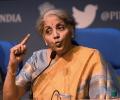
Finance Minister Nirmala Sitharaman presented her third Budget on February 1.
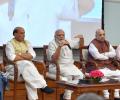
Many changes are likely in the BJP and government in coming weeks.
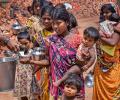
Karnataka, Meghalaya, Punjab, Gujarat, Rajasthan, Telangana and Haryana have partially resumed operations.
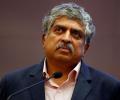
We followed the highest standard of corporate governance and disclosures, says Nilekani.

Mid and small companies are more generous in rewarding their CEOs as compared to their larger peers.

'We all wanted a strong Centre with a decisive mandate from the people, to allow them to take bold decisions.'
The new government's challenge would be to reverse the tide in FDI, boost manufacturing and come up with an e-commerce policy that is fair to all investors.

Exposure to these funds should not exceed 10% to 15% of the equity portfolio and the investment horizon should be at least seven years.

Investors should take limited exposure in credit risk funds.

On the flipside, since 60-70 per cent of the costs pertain to raw material, which are mostly imported, currency fluctuation is a key risk for the segment.
 © 2026 Rediff.com - Advertise with us - Disclaimer - Privacy Policy - Sitemap - Feedback - About us - Terms of use - Grievances